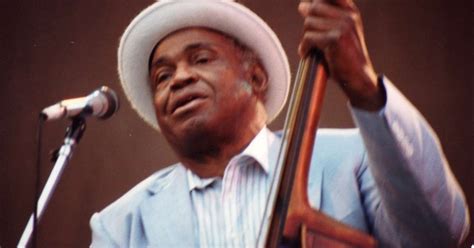
5MBS Blues Legend for November – Willie Dixon: The Poet of the Blues
Willie Dixon is undoubtedly one of the most important figures in the history of the blues. Outstanding songwriter, bass player, singer, arranger and record producer whose songs shaped the sound of Chicago blues, the blues world-wide, and influenced generations of musicians. Born on July 1, 1915, in Vicksburg, Mississippi, Dixon grew up surrounded by the music and the traditions of the American South.
As a young boy, Dixon was exposed to music through his mother, who wrote poetry and religious verses. He developed an early interest in singing and writing songs. Like many African Americans during the Great Migration, Dixon’s family eventually travelled north in search of better opportunities, arriving in Chicago in mid 1930, aged 21. By the 30’s, Chicago was the major epicentre for electric blues, attracting musicians from all the Southern states.
Before becoming a full-time musician, Dixon worked in various jobs and even pursued boxing, winning the Illinois Golden Gloves amateur heavyweight boxing championship in 1937 and briefly sparred with Joe Louis before quitting over a monetary dispute.
Having learned to play the upright bass, and guitar, Willie Dixon began performing with local musicians, as the Big Three Trio and gradually establishing himself in Chicago’s blues scene.
Dixon’s breakthrough came when he joined Chess Records, one of the most influential blues record labels in America. Dixon became a pivotal staff bassist, A&R man, arranger, and house songwriter for Chess Records. As a songwriter, arranger and producer, he helped develop the distinctive Chicago blues sound, with songs recorded by some of the greatest blues artists of the era, including Muddy Waters, Howlin’ Wolf, Little Walter and Sonny Boy Williamson.
Dixon’s best-known compositions include Hoochie Coochie Man, I Just Want to Make Love to You, Little Red Rooster, Spoonful, Back Door Man and You Shook Me, withDixon actually writing over 500 songs, combining memorable melodies, powerful rhythms, clever lyrics and a strong sense of humour. Furthermore, Dixon had a remarkable ability to capture human emotions, relationships, desire and everyday struggles in simple but unforgettable lyrics. His influence extended beyond the blues, playing upright bass on early sessions for Chuck Berry and Bo Diddley, bridging Delta blues with rock and roll.
During the 1960s, British rock bands discovered the music of Chicago blues artists and began recording their songs. The Rolling Stones recorded Dixon’s Little Red Rooster and I Just Want to Make Love to You, while the Doors recorded Back Door Man. Led Zeppelin also recorded You Shook Me and I Can’t Quit You Baby. These recordings introduced Dixon’s songwriting to new audiences around the world and helped establish the blues as a foundation of modern rock music.
Willie Dixon was a significant advocate for the blues, helping to organize and perform in the American Folk Blues Festival tours across Europe during the 1960s. He formed his own touring and recording ensemble – Chicago Blues All-Stars– to showcase classic Chicago blues.
Dixon was also an important advocate for musicians’ rights. He understood that many black blues artists had received inadequate recognition and compensation for their work and worked to preserve blues heritage and support musicians. Through his fight against historical industry exploitation of blues artists, Dixon participated in the establishment of the Blues Heaven Foundation in 1981 to protect copyrights and assist musicians. And Dixon also won legal settlements regarding uncredited and plagiarized material, including a 1987 settlement with Led Zeppelin over “You Need Love” / “Whole Lot of Love”.
Dixon won a Grammy Award for Best Traditional Blues Album for Hidden Charms in 1988, and the following year released his autobiography I Am the Blues. He was inducted into the Rock and Roll Hall of Fame in 1994, recognising his influence as a songwriter and musician.
Willie Dixon died on January 29, 1992, in Burbank, California, aged 76. His legacy remains central to the history of American music.
Willie Dixon’s genius lay in his ability to turn the experiences of ordinary people into timeless songs. Often, described as the Poet of The Blues, Dixon propelled the music from the Mississippi Delta to Chicago and, eventually, onto the international stage. His songs remain a lasting testament to the power, emotion and enduring appeal of the blues.